
“It must always get darker before it can get light again"
The camp diary of Isy Aronowitz December 13, 1940 - August 26, 1943
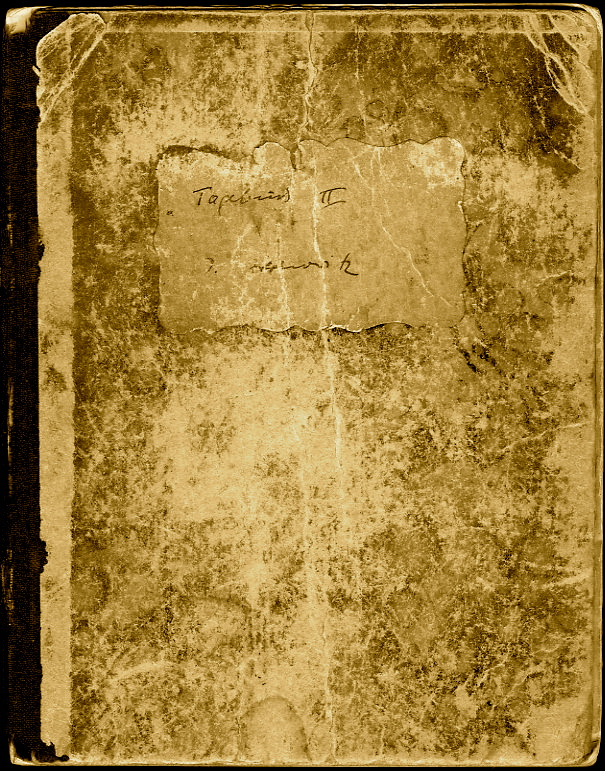
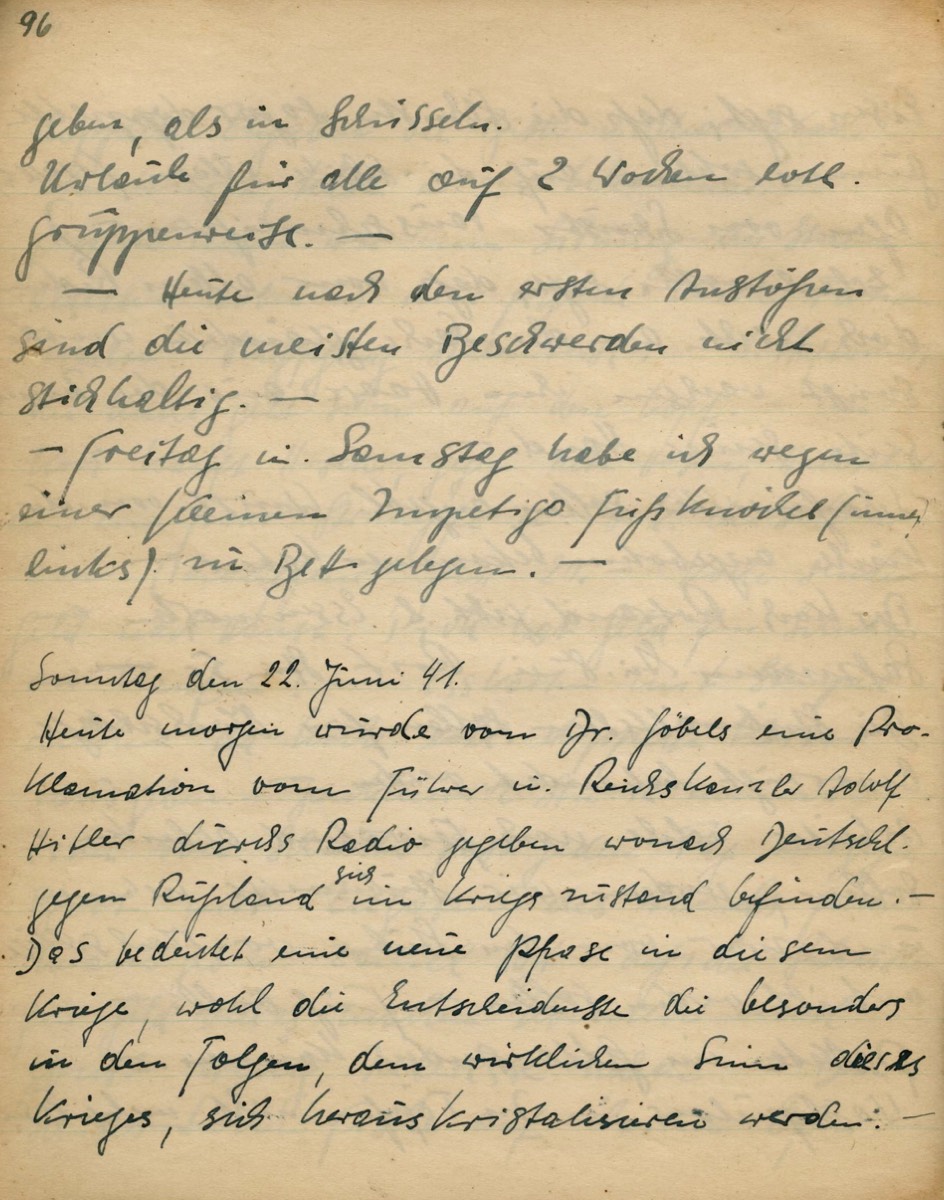
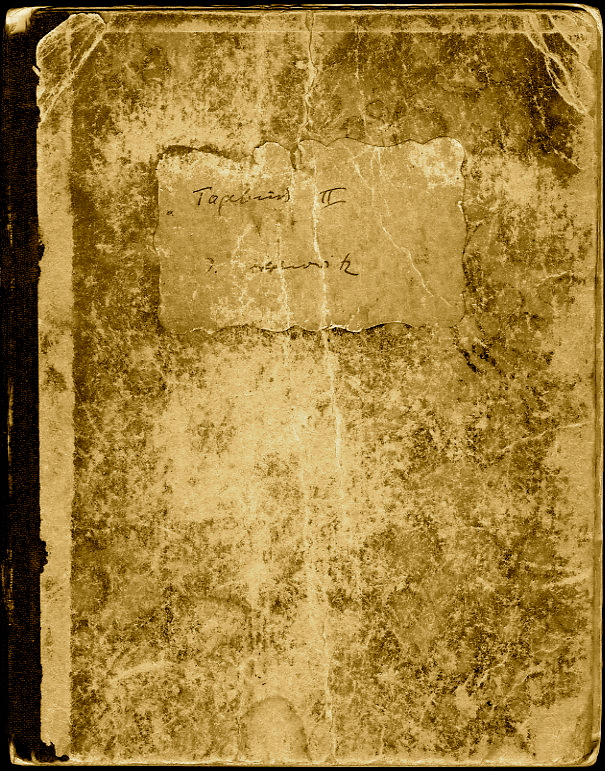
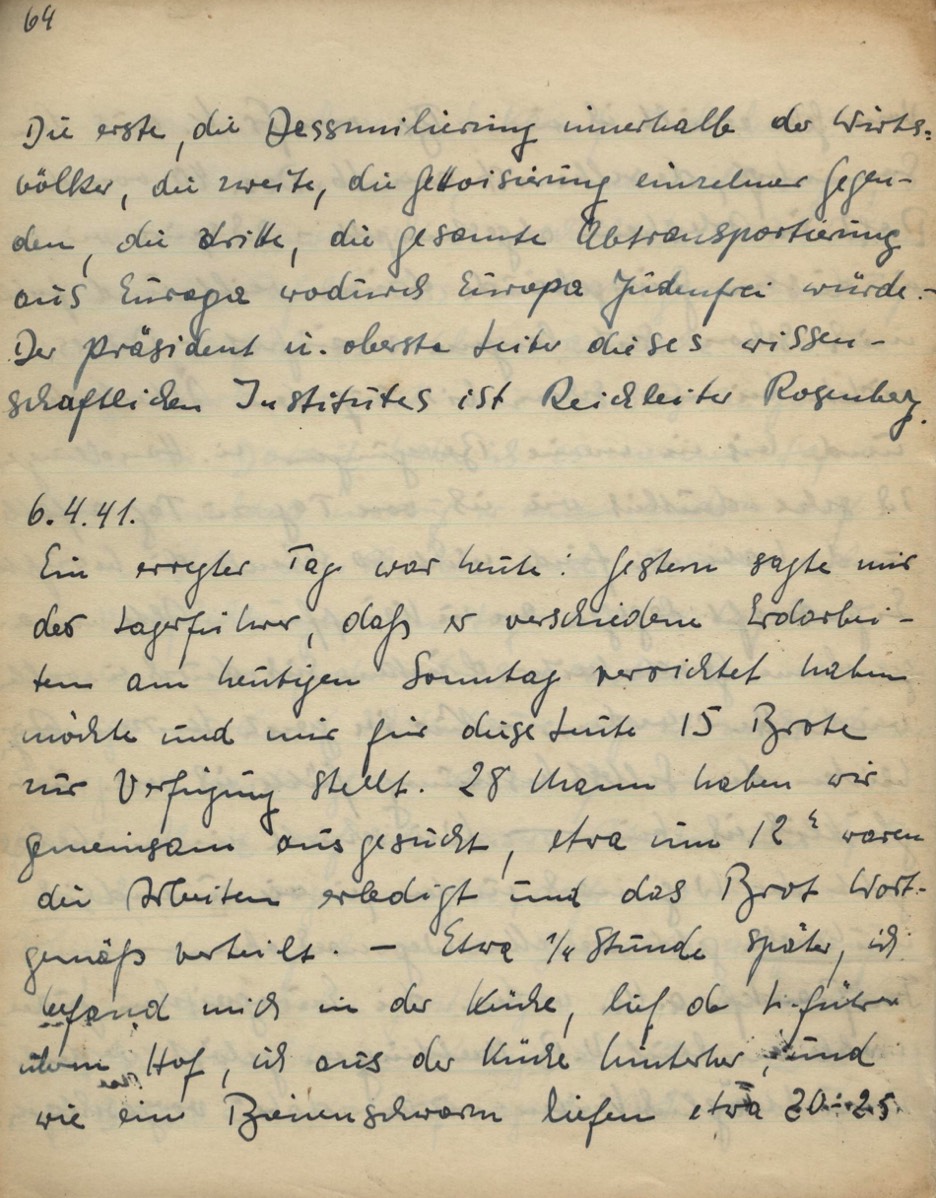
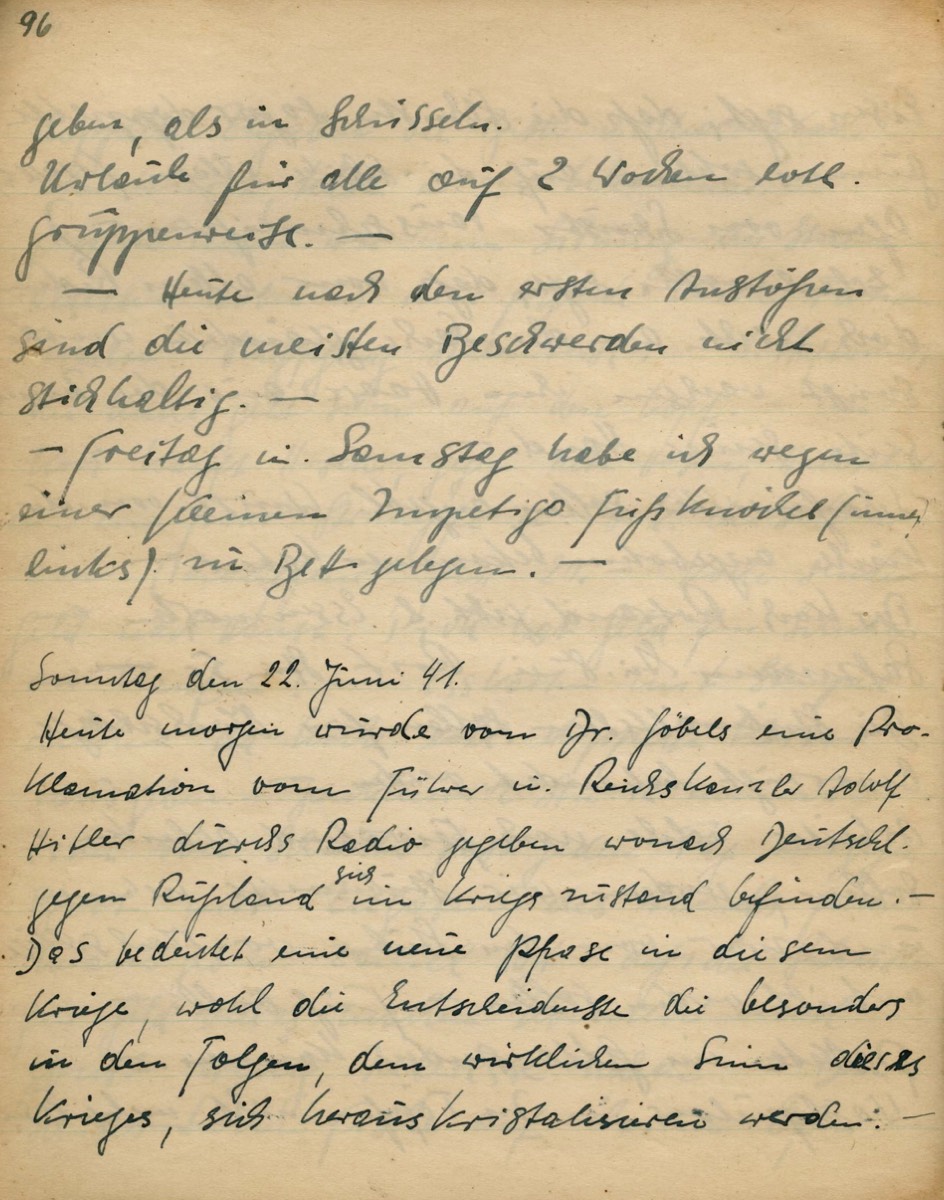
Isy Aronowitz - my Great Uncle - from Wuppertal-Elberfeld was deported in 1938 at the age of 25 as an ‘Eastern Jew’. He was sent to the Lódź Ghetto and then to two camps, where he was forced to perform hard labour on the construction of an Autobahn in the conquered East and in the armaments industry. He managed to record his life as a forced labourer from December 1940 to August 1943 in an informative and moving diary. This is the first comprehensive source to describe everyday life during Autobahn construction from the perspective of a forced labourer. The diary is a unique source that makes Isy’s and his fellow inmates’ role in the Nazi system more visible at last.
Holocaust-Gedenktag: neues Lagertagebuch veröffentlicht
Das Lagertagebuch von Isy Aronowitz 13. Dezember 1940 bis 26. August 1943
Deutschlandfunk-Podcast von Guttmann, Micha; Baumgart, Constanze | 30. Januar 2026, 15:52 Uhr
Link: https://www.deutschlandfunk.de/holocaust-gedenktag-neues-lagertagebuch-veroeffentlicht-100.html
Link: https://www.deutschlandfunk.de/holocaust-gedenktag-neues-lagertagebuch-veroeffentlicht-100.html
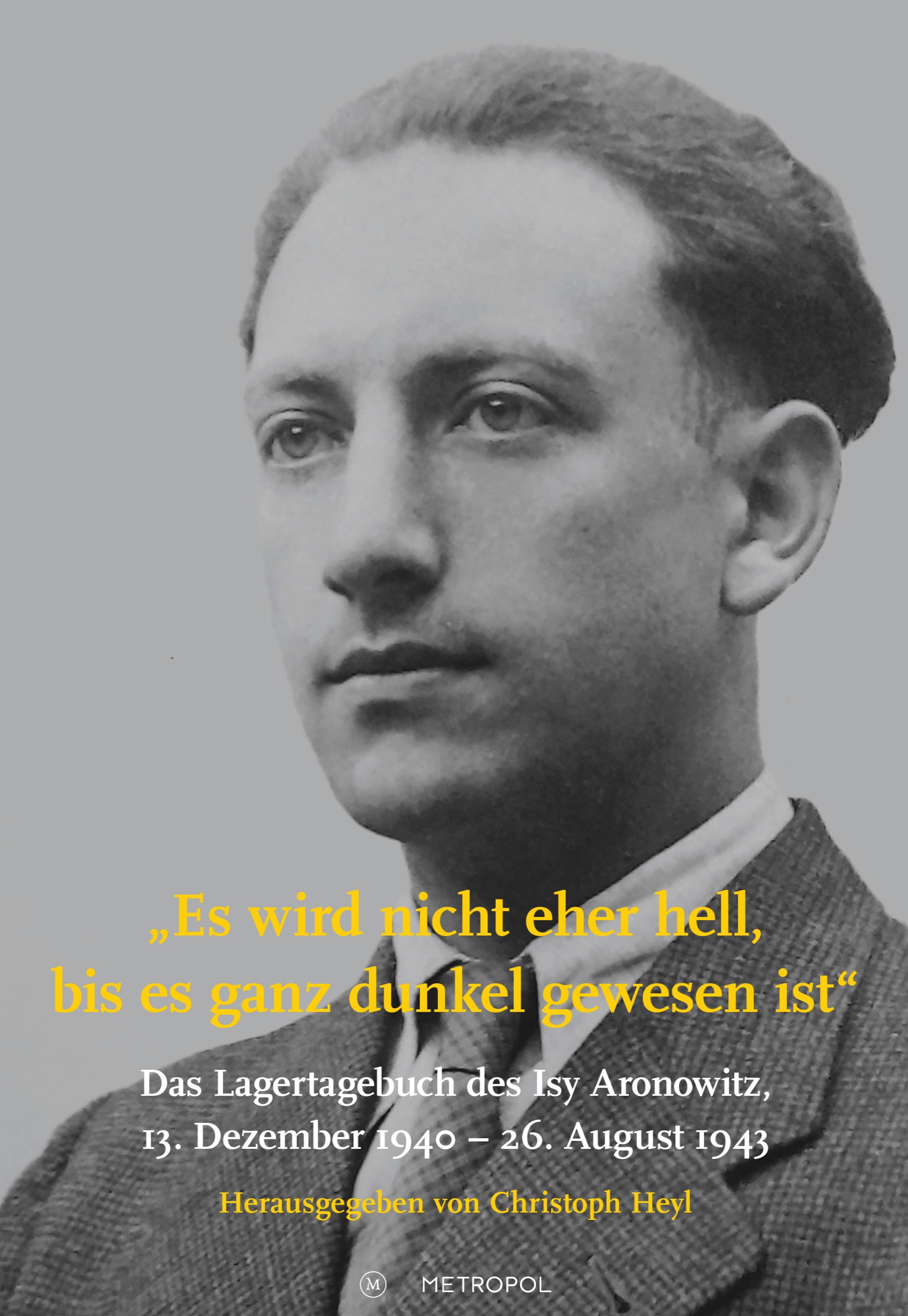
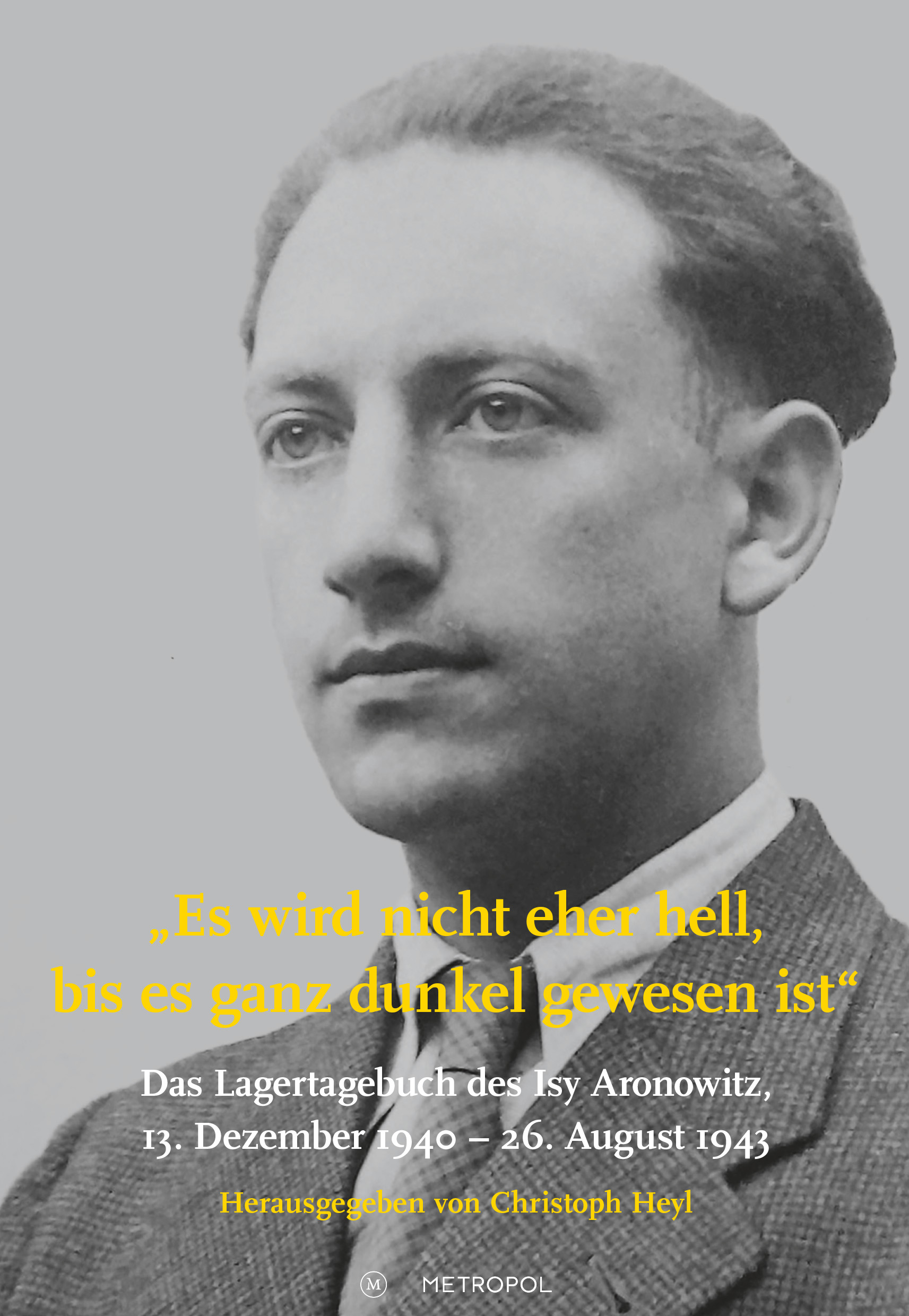
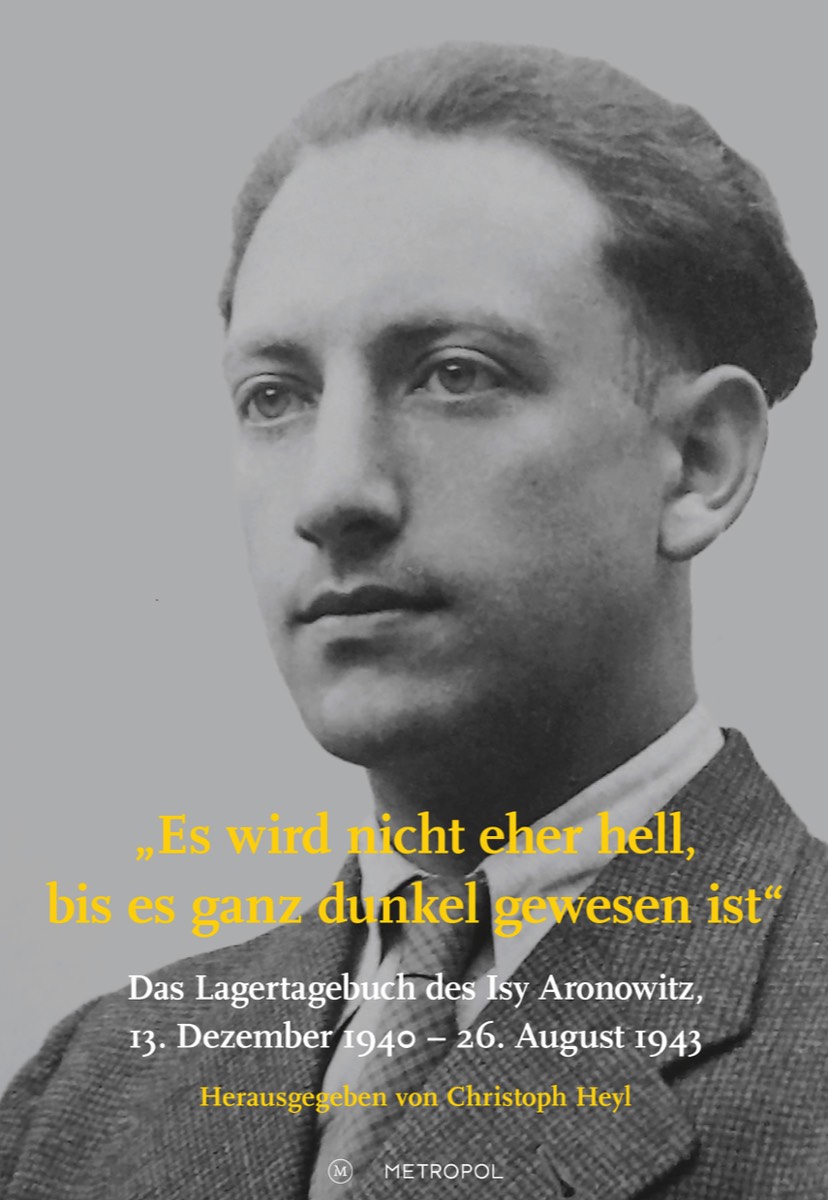
Herausgegeben von Christoph Heyl mit einem Vorwort von Richard Aronowitz-Mercer
Studien und Dokumente zur Holocaust- und Lagerliteratur, Band 16
Christoph Heil ist Professor für Anglistik an der Universität Duisburg-Essen
Metropol Verlag
Friedrich Veitl
Ansbacher Str. 70
D-10777 Berlin
Kontakt: Obscure_Metropol
web: www.metropol-verlag.de
Studien und Dokumente zur Holocaust- und Lagerliteratur, Band 16
Christoph Heil ist Professor für Anglistik an der Universität Duisburg-Essen
Metropol Verlag
Friedrich Veitl
Ansbacher Str. 70
D-10777 Berlin
Kontakt: Obscure_Metropol
web: www.metropol-verlag.de

review
The diary of a concentration camp survivor
A review by Dan Stone
in: Times Literary Supplement May 2026
A review by Dan Stone
in: Times Literary Supplement May 2026
Notes from the grey zone
The diary of a concentration camp survivor
A review by Dan Stone
in: Times Literary Supplement May 2026
A review by Dan Stone
in: Times Literary Supplement May 2026
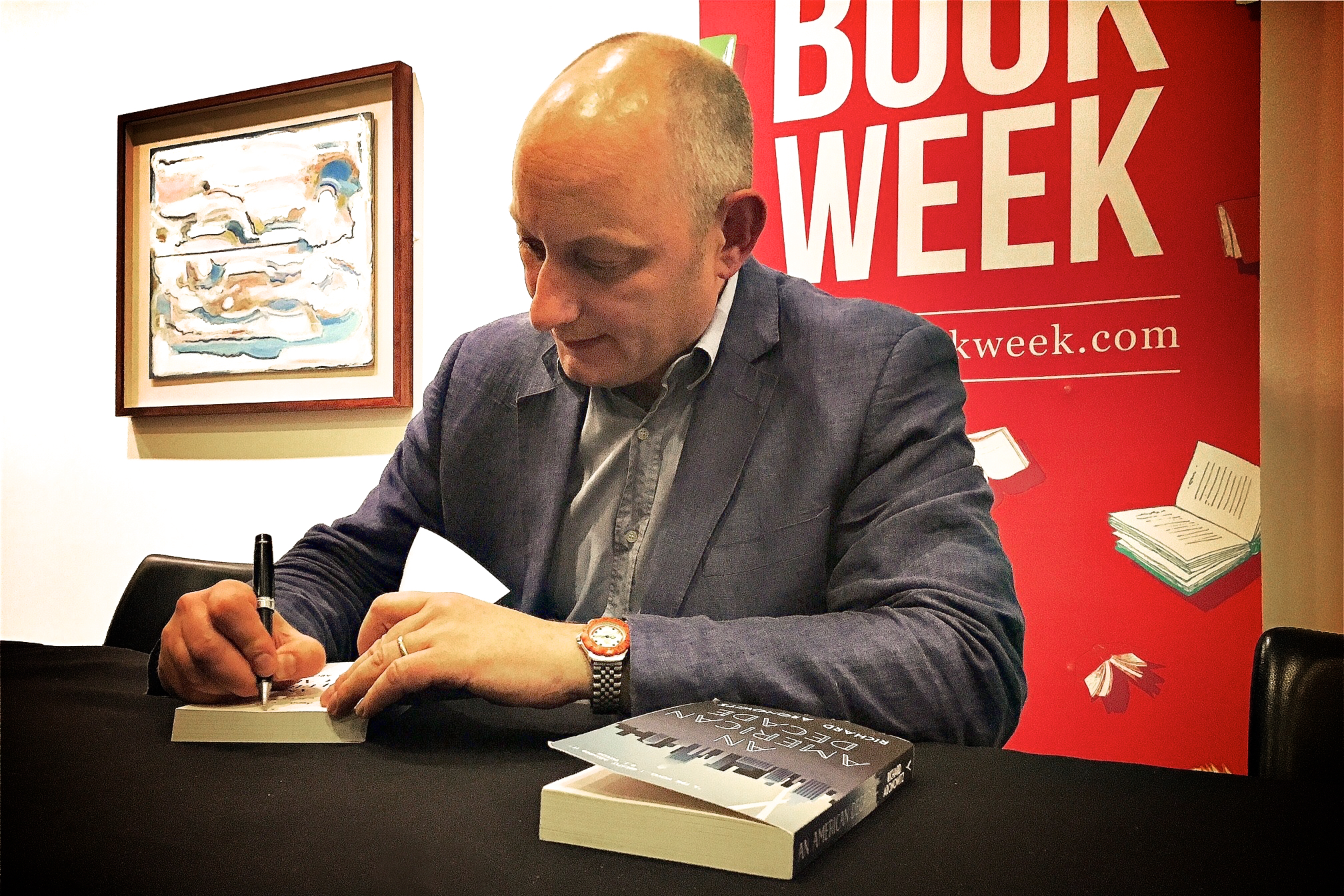
In his novel Five Amber Beads (2006), Richard Aronowitz cites his great- uncle Isy's diary, quoting from it directly and at some length. In the context of a work of fiction, the reader wonders whether the diary is a figment of the author's imagination. This beautifully presented edition of the original sets such doubts aside. As the novelist says of the diary, "Isy's words create an almost perverse scene-setting: the facts and events he describes lull the reader into an easy familiarity with the everyday until the realisation of where he is cuts you". Now we can read the original, we can see that this claim is amply justified. At the same time, it raises questions that are different from more familiar Holocaust diaries.
Isy Aronowitz was a Jew by Nazi definition, a Christian by education and an advocate of Rudolf Steiner's anthroposophy by choice. Unlike his older siblings, who were born in Łódź, Isy was born in Wuppertal and attended a Lutheran school. In 1938, following the murder of the German attaché Ernst vom Rath in Paris which precipitated Kristallnacht, Aronowitz was among the "Polish Jews" rounded up and dumped in the no man's land on the German-Polish border. Subsequently, he ended up in the Łódź (Litzmannstadt) Ghetto, then the Sternberg labour camp in Brandenburg, where he wrote his diary.
In recent years, scholars have researched previously little-known forced labour camps such as Brande and Gerasdorf, and investigated the use of forced labour in the building of the "Reichsautobahn", for example in the Eifel region. Sternberg was one such camp, where Jews who "volunteered" to leave the Łódź Ghetto worked on the Autobahn in return for the promise – unfulfilled, needless to say – of better rations for their families. Life at Sternberg, as Christoph Heyl points out, combined the apparent normality of working for a private firm with the permanent threat of violence in the context of a camp surrounded by barbed wire. What makes the diary even more unusual is that Aronowitz was elected Unterführer – second-in-command after the (German) commandant – representing the inmates and passing down orders.
Aronowitz was well aware of the compromised position in which this functionary role placed him. He inhabited what Primo Levi called the “grey zone”; his diary suggests that he tried his best to act fairly, without degrading either the inmates or himself. Whether writing in vain to Chaim Rumkowski, the infamous “Elder” of the Łódź Ghetto, to plead for medicine for the sick inmates in Sternberg, or negotiating a more equitable distribution of rations, it is clear that Aronowitz did what he could. At the same time, he knew that he was “privileged”, as demonstrated by a diary entry of February 16, 1941:
It is a strange time that I am now experiencing as Unterführer. I have become more impudent and as a result have earned myself a bit more respect. But it’s also a sad way. The same lads with whom I used to share a barracks now say Herr Unterführer to me, which feels a bit odd. Hopefully I will resist climbing the insidious steps of vanity or arrogance. I can feel how strong these seductive powers are.
A few months later, he notes being threatened by the new commandant with being hanged should he ever talk back to a guard again. Of course, what we have in his diary is only what he chose to record.
In April 1943, Isy Aronowitz was transferred from Sternberg to another labour camp at Eberswalde, and in August to Auschwitz, from where he was sent to Buchenwald in January 1945, then to Langenstein, where he was liberated. Precisely how his diary from Sternberg survived is unknown, but it seems that someone managed to send it to family friends in Wuppertal. However it reached us, it is a precious document, not only because it is one of few pieces of evidence concerning a small camp about which little is known, but also because it describes how a young man persecuted as a Jew responded to the complex situation in which he was placed. No wonder that the publishers have chosen the final words of the diary as its title: “It won’t get light again until it has been completely dark”.
Dan Stone is Professor of Modern History at Royal Holloway, University of London.
Source: Times Literary Supplement May 2026
Isy Aronowitz was a Jew by Nazi definition, a Christian by education and an advocate of Rudolf Steiner's anthroposophy by choice. Unlike his older siblings, who were born in Łódź, Isy was born in Wuppertal and attended a Lutheran school. In 1938, following the murder of the German attaché Ernst vom Rath in Paris which precipitated Kristallnacht, Aronowitz was among the "Polish Jews" rounded up and dumped in the no man's land on the German-Polish border. Subsequently, he ended up in the Łódź (Litzmannstadt) Ghetto, then the Sternberg labour camp in Brandenburg, where he wrote his diary.
In recent years, scholars have researched previously little-known forced labour camps such as Brande and Gerasdorf, and investigated the use of forced labour in the building of the "Reichsautobahn", for example in the Eifel region. Sternberg was one such camp, where Jews who "volunteered" to leave the Łódź Ghetto worked on the Autobahn in return for the promise – unfulfilled, needless to say – of better rations for their families. Life at Sternberg, as Christoph Heyl points out, combined the apparent normality of working for a private firm with the permanent threat of violence in the context of a camp surrounded by barbed wire. What makes the diary even more unusual is that Aronowitz was elected Unterführer – second-in-command after the (German) commandant – representing the inmates and passing down orders.
Aronowitz was well aware of the compromised position in which this functionary role placed him. He inhabited what Primo Levi called the “grey zone”; his diary suggests that he tried his best to act fairly, without degrading either the inmates or himself. Whether writing in vain to Chaim Rumkowski, the infamous “Elder” of the Łódź Ghetto, to plead for medicine for the sick inmates in Sternberg, or negotiating a more equitable distribution of rations, it is clear that Aronowitz did what he could. At the same time, he knew that he was “privileged”, as demonstrated by a diary entry of February 16, 1941:
It is a strange time that I am now experiencing as Unterführer. I have become more impudent and as a result have earned myself a bit more respect. But it’s also a sad way. The same lads with whom I used to share a barracks now say Herr Unterführer to me, which feels a bit odd. Hopefully I will resist climbing the insidious steps of vanity or arrogance. I can feel how strong these seductive powers are.
A few months later, he notes being threatened by the new commandant with being hanged should he ever talk back to a guard again. Of course, what we have in his diary is only what he chose to record.
In April 1943, Isy Aronowitz was transferred from Sternberg to another labour camp at Eberswalde, and in August to Auschwitz, from where he was sent to Buchenwald in January 1945, then to Langenstein, where he was liberated. Precisely how his diary from Sternberg survived is unknown, but it seems that someone managed to send it to family friends in Wuppertal. However it reached us, it is a precious document, not only because it is one of few pieces of evidence concerning a small camp about which little is known, but also because it describes how a young man persecuted as a Jew responded to the complex situation in which he was placed. No wonder that the publishers have chosen the final words of the diary as its title: “It won’t get light again until it has been completely dark”.
Dan Stone is Professor of Modern History at Royal Holloway, University of London.
Source: Times Literary Supplement May 2026